Bigfoot has been deeply embedded in popular culture for a very long time. It has lived for decades in documentaries, late night television, YouTube videos, podcasts, conventions, eyewitness stories, and TV shows such as Finding Bigfoot. Across nine seasons and more than 100 episodes, that show kept the search alive without ever producing conclusive evidence that Bigfoot actually exists.
That alone tells you something.
There has always been an odd tension at the heart of the Bigfoot phenomenon. The search never quite ends. The evidence never quite arrives. The next discovery is always just around the corner. And yet the myth not only survives, it thrives.
You cannot help wondering whether some of the people most invested in the search have also been invested in not solving it. After all, the moment somebody really did produce indisputable proof, the mystery would end. The hunt would be over. The TV format would collapse. The legend would be transformed from a cultural obsession into a zoological fact. Strange as it sounds, Bigfoot has often been most useful as an unresolved question.
Still, for all the blurry photos, strange footprints, nighttime noises, and dramatic eyewitness reports, one piece of evidence has always stood above the rest.
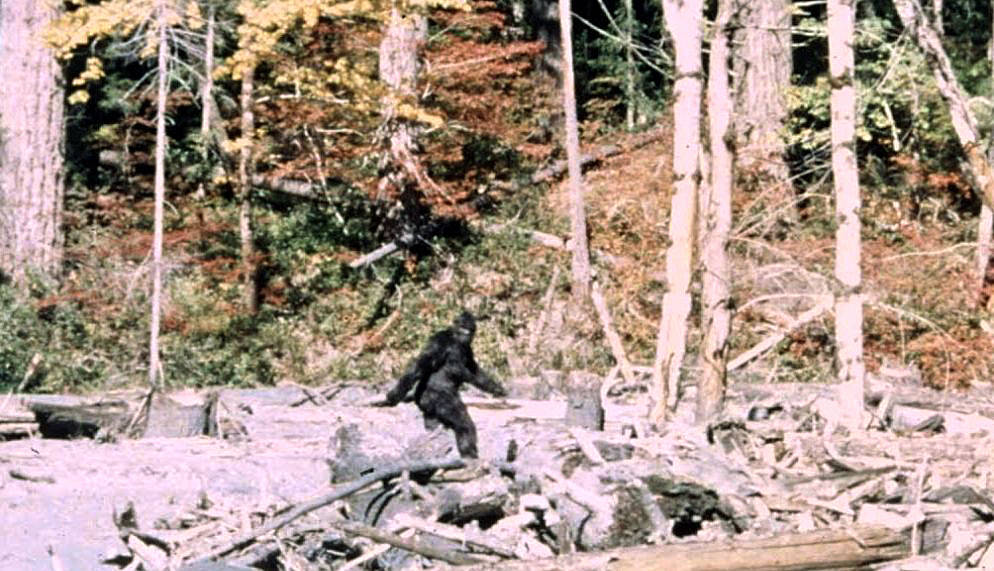
The 1967 Patterson–Gimlin film.
There are a lot of edited copies flowing about, but let’s put all that to one side and show you the original …
For believers, it has long been the crown jewel. The clip that seemed too iconic to ever fully collapse. The footage that gave the legend visual form. The one piece of “evidence” that looked just convincing enough, and just mysterious enough, to keep the argument going decade after decade.
That is why something genuinely interesting has happened in March 2026.
A new documentary called Capturing Bigfoot, directed by Marq Evans, has reopened the entire question of the Patterson–Gimlin film in dramatic fashion. And this time it is not just another skeptic repeating the usual objections. It is a story involving a newly discovered reel of old film, family testimony, people connected to the original event, and a fresh retelling of what may have really happened.
That is why I am writing about Bigfoot now. Not because this is a new myth, but because there is a new development in one of its oldest and most famous pieces of supposed evidence.
The 2026 reveal – Capturing Bigfoot
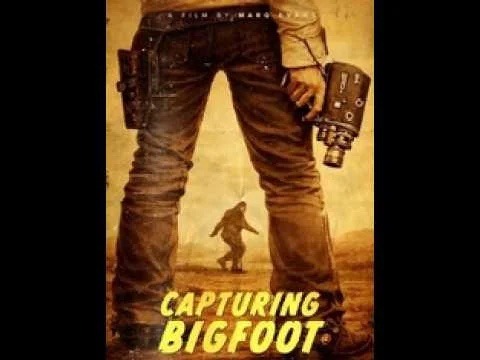
According to reporting around the documentary, the story begins when Norm Johnson passed away. His daughter, Teresa Brooks, discovered a reel of 16mm film locked in his safe. When the film was developed, it appeared to show something extraordinary. It was a 1966 clip, around 40 seconds long, showing a slimmer Bigfoot figure walking through a wooded area in a way that strongly resembles the much more famous 1967 Patterson–Gimlin footage.
That is the bombshell at the center of Capturing Bigfoot.
And yes, the connections matter. Norm Johnson was not some random outsider. He was part of the same orbit as Roger Patterson and Bob Gimlin. These people knew one another. That is a large part of what gives the discovery its significance.
Once Teresa Brooks understood what she might have found, she contacted her colleague Marq Evans. Evans then followed the story further and contacted Clint Patterson, the son of Roger Patterson. According to accounts surrounding the documentary, Clint said he had been told years earlier by his mother that the famous 1967 film was a hoax. He had apparently already been considering writing a tell all account of the story.
The documentary also reportedly includes interviews with people from the era when the original footage was made. Most notably, it includes Bob Heironimus, now elderly, who again says that he was the man inside the Bigfoot suit. It also includes Bill Munns, a Hollywood makeup and visual effects specialist who has long been associated with detailed analysis of the film and the practical realities of costume work.
Taken together, this is the kind of material that makes people sit up and pay attention. Not because it instantly settles everything for everyone, but because it strikes at the heart of Bigfoot’s most famous visual claim.
And that is what makes it such a fascinating story.
Why this matters so much
It would be easy to shrug and say that the Patterson–Gimlin footage has been argued over for years, so what difference does one more documentary make.
But that misses the point.
The Patterson–Gimlin film has never been just another clip. It has been THE Bigfoot clip. It is the one that believers return to again and again. It is the one that has been endlessly stabilised, enhanced, slowed down, scrutinised, and mythologised. It is the one that gave the Bigfoot legend a body and a gait and an image that could be replayed forever.
If that film is exposed not just as doubtful, but as staged, then something bigger than one hoax is at stake. It means the single most important visual anchor for modern Bigfoot belief was never an anchor at all. It was theatre.
That would not prove that Bigfoot as an idea is false in every possible sense. Believers would still be free to say that one hoax does not disprove every alleged sighting or every strange experience in the woods. Strictly speaking, that is true.
But culturally it would still be devastating, because so much of the legend’s apparent seriousness has rested on the idea that this one piece of evidence stood apart from all the rest.
If that goes, then what is left looks a lot more fragile.
The likely reaction from true believers
None of this means that committed Bigfoot believers will suddenly give up.
Quite the opposite.
One of the more interesting features of deeply held beliefs is that contradictory evidence does not always weaken them. Sometimes it strengthens them. People who have invested years, reputation, emotion, identity, and community into a belief are rarely eager to abandon it simply because a new challenge appears.
That dynamic seems to be visible already.
When informed that new footage would be released suggesting the Patterson–Gimlin film was a hoax, Matt Moneymaker of the Bigfoot Field Researchers Organization reportedly responded by questioning how anybody could trust such material in the age of AI. In one sense that is a very modern response. In another sense it is a very human one.
When people are heavily invested in a belief, the mind often does not begin by asking whether the new evidence is true. It begins by asking how the new evidence can be dismissed.
That is not unique to Bigfoot. It is a common human pattern. It is what confirmation bias looks like in practice. We all do it to some degree. We protect the beliefs that matter to us. We scrutinise unwelcome evidence more harshly than friendly evidence. We move the goalposts. We search for reasons not to let go.
When Evans suggested that hard-core believers would find it very hard to accept his documentary, then yes, he is most probably right.
And that is understandable.
Bigfoot is not just a claim about an animal. For many people it is a world of fascination, memory, identity, hobby, community, and shared adventure.
Does Bigfoot really exist?
That brings us to the larger question.
Even if this documentary does indeed seriously undermine the Patterson–Gimlin film, what about everything else? Why do so many people still conclude that Bigfoot is a myth rather than a real undiscovered creature?
The basic reason is simple.
Extraordinary claims require robust evidence. And after many decades of stories, blurry photographs, alleged tracks, suspicious hair samples, dramatic noises, and supposed encounters, there is still no reliable physical evidence that a large unknown ape is living in North America.
That is the problem in one sentence.
If Bigfoot were real, what would count as convincing evidence would not be another fuzzy video or another hunter saying he saw something at dusk. It would be a body, bones, teeth, tissue from a verified specimen, a living captured animal, or a substantial collection of DNA samples that consistently point to the same unknown species.
We do not have any of that.
Not almost. Not close. Not “there are some interesting hints.” We just do not have it.
And that absence matters more than believers often admit.
Why most people conclude Bigfoot is a myth
There are several strong reasons to reject Bigfoot as a real undiscovered species.
1. Eyewitness testimony is weak on its own
People absolutely do report strange experiences. Some are sincere. Some are frightened. Some are excited. Some are utterly convinced they saw something extraordinary.
But human perception is not very reliable, especially under the conditions in which most Bigfoot sightings are supposed to happen. Low light. Long distance. Dense woods. Brief glimpses. Stress. Fear. Expectation. Noise. Movement in peripheral vision.
That is exactly the sort of environment in which misidentification thrives.
A bear standing upright. A person in dark clothing. A trick of shadow. An unusual sound. A partially seen shape moving through trees. All of these can create confident but mistaken reports.
A sincere witness is not necessarily a reliable witness.
That is not an insult to the witness. It is just how human perception works.
2. There is no confirmed physical specimen
This is the central problem and it remains fatal.
If a large breeding population of Bigfoot existed, there should be physical remains. Bones. Teeth. Carcasses. Droppings. Hair. Bedding sites. Repeated DNA traces. Something solid enough that trained people could examine it and say yes, this is a real unknown species.
That has not happened.
Not in a way that survives scrutiny.
Hair samples usually turn out to come from known animals. Tissue claims collapse. Tracks are often dubious. Photographs remain ambiguous. Stories remain stories.
It is not that the evidence is weak but promising. It is that the evidence repeatedly fails when examined closely.
3. A real species needs a breeding population
One creature would not be enough. For Bigfoot to exist as a species, there would need to be a population large enough to survive over generations. That means many individuals, occupying habitat, finding food, reproducing, dying, and leaving environmental traces.
A breeding population of large primates is not something that hides forever by sheer luck.
North America is not an untouched mystery zone. It is heavily travelled, heavily photographed, extensively mapped, scientifically studied, and increasingly monitored. There are hunters, hikers, campers, foresters, park rangers, trail cameras, drones, road crews, and wildlife biologists everywhere.
A population of huge mammals would leave a much stronger footprint than this.
4. The evidence keeps collapsing
This is one of the most revealing patterns in the whole Bigfoot story.
The evidence is almost always impressive at first glance and disappointing on closer inspection.
Footprints turn out to be inconclusive or fraudulent. Hair samples turn out to be from bears, deer, or other known animals. Videos are blurry and too brief. Photos are distant and ambiguous. Recordings of strange sounds prove little.
The same cycle repeats again and again.
Claim. Excitement. Publicity. Closer examination. Collapse.
That is not what strong evidence looks like. That is what folklore looks like when it continually searches for physical form.
5. The ecology is deeply implausible
A giant primate would need enormous practical support from its environment. Food, water, shelter, territory, breeding range, population stability, and enough numbers to avoid inbreeding collapse.
That kind of species would leave traces in the ecosystem.
It is not impossible in principle for science to miss some things for a while. New species are discovered all the time. But those are usually insects, marine creatures, small animals, or species in remote and poorly studied environments.
A huge terrestrial primate in North America is a very different proposition.
That is not a subtle oversight. That would be a staggering zoological miss.
6. The myth is stronger than the evidence
This is where the whole subject becomes more interesting than a simple yes or no question.
Bigfoot is not just a biological claim. It is a cultural story. It gathers together wilderness, mystery, folklore, fear, adventure, outsider identity, distrust of experts, and the seductive idea that the modern world still has one enormous secret left in it.
That is powerful material.
And powerful stories can survive even when their evidence does not.
Why Bigfoot will never quite die
This is, to me, the most interesting part of the whole phenomenon.
Even if Capturing Bigfoot badly damages the Patterson–Gimlin film, it probably will not kill the Bigfoot myth. The reason is that Bigfoot is not really surviving on evidence at this point. It is surviving on psychology, culture, identity, and entertainment.
Humans are pattern seekers. We are wired to make sense of partial information. Hear an odd sound in the woods. Glimpse a shape at dusk. Find a strange footprint in mud. The brain rushes to finish the story.
Once Bigfoot is already part of the culture, it becomes a ready made explanation for anything strange and half seen.
Eyewitness testimony also feels emotionally powerful, even when it is unreliable. A sincere person saying, “I know what I saw,” is compelling. It has weight. It sounds authentic. But sincerity is not the same as accuracy. People can be completely honest and completely wrong.
Bigfoot also lives in the gap between certainty and mystery. Many people like the idea that not everything has been explained. Bigfoot offers an appealing kind of mystery. It is eerie, exciting, and strange, but not usually as politically charged or emotionally heavy as many other fringe beliefs. It is a myth people can enjoy.
Then there is the issue of cultural repetition. Television shows, podcasts, conventions, documentaries, YouTube channels, local legends, and endless retellings keep the creature alive. Once a myth becomes part of entertainment culture, it no longer needs strong evidence in order to persist. It just needs attention.
Ambiguous evidence helps rather than hurts. From a scientific point of view, blurry photos and vague tracks are weak. From the point of view of legend, they are perfect. They keep the argument open. They invite projection. They give believers just enough material to defend the possibility without ever forcing resolution.
Communities form around the belief too. For some people, Bigfoot is not merely a hypothesis about zoology. It is a hobby, a social world, an identity, a shared adventure. Going on hunts, telling stories, collecting footage, and pushing back against skeptics can be rewarding in itself.
Distrust of authority plays a role as well. Some people find it attractive to believe that scientists, experts, or officials are missing something obvious or hiding the truth. In that mindset, skepticism does not weaken the myth. It strengthens it. The lack of evidence becomes evidence of suppression, blindness, or arrogance.
And finally, Bigfoot is very hard to fully disprove because the claim is so elastic. If no evidence is found in one region, believers can say the creatures moved elsewhere. If no DNA appears, they can say Bigfoot is too rare. If cameras fail, they can say the creature avoids humans. The goalposts can always move.
A claim like that can survive indefinitely.
The deeper lesson
That is why this story is bigger than Bigfoot.
What makes Capturing Bigfoot interesting is not just the possibility that the Patterson–Gimlin film may finally be coming apart. It is that the documentary seems to expose the mechanics of belief itself. How legends are built. How they acquire emotional force. How communities organise around them. How contradictory evidence gets resisted. How ambiguity becomes fuel instead of weakness.
In that sense, Bigfoot is not just a creature story.
It is a belief story.
It shows how something can persist in public imagination long after its evidential foundations have eroded. It shows how myths endure because they meet psychological and cultural needs. It shows how people do not simply believe things because the evidence is strong. They often believe because the story is meaningful, enjoyable, identity forming, or emotionally satisfying.
That is why Bigfoot will probably outlive this documentary.
Not because the evidence is compelling.
But because the legend is.
Bottom line
If Capturing Bigfoot is right, then the most famous Bigfoot footage ever filmed was not a glimpse of an undiscovered creature. It was a performance.
That would not be surprising. It would simply confirm what skeptics have argued for decades.
What matters more is the larger pattern. Bigfoot survives not because the evidence is strong, but because the myth is strong. It endures because it lives in the human appetite for mystery, story, and the possibility that something enormous still hides just beyond the edge of what we know.
That is why no amount of debunking is ever likely to bury it completely.
Bigfoot does not really live in the forest anymore.
It lives in the culture.